
Ah.. the humble pork shoulder, or also known as pork butt. Butt. Hehehe… (Yes, I am an adult. Why do you ask?) This is probably the most economical piece of meat out there. It’s relatively inexpensive and when cooked correctly (low and slow) it will yield the most *chef’s kiss* succulent dishes. It is also one of the best piece of meats for bulk cooking, which what today’s recipe is all about. Please note that if you want to follow this recipe exactly, you will need a big a$$ pot and a big a$$ crowd (or big a$$ appetite). If you have neither, please halve the recipe.
Ingredients:
- 8 lbs. (approx. 3.5 kg) pork shoulder (I bought a 9 lb. and trimmed the fat pretty extensively and I ended up with about 8 lbs.-ish)
- 3 large onions, roughly chopped
- 1 medium bunch of fresh sage, strip the leaves from the stems and tear them in big chunks
- 1.5 quart (about 1500 ml) apple cider (not juice as that can be too sweet for this recipe)
- 0.6 cup (about 150 ml) apple cider vinegar
- 1 cup (about 250 ml) heavy cream (or half and half)
- 1.5-2 tablespoons of cornstarch
Directions:
- Cut up the pork shoulder into large chunks, about the size of the palm of your hand. I have done this dish with small, stew meat-sized chunks but because of the long cooking process, they will fall apart so the larger chunks are deliberate so that you can still have nice big pieces in your dish. Salt and pepper the surface of the pork generously and set aside.
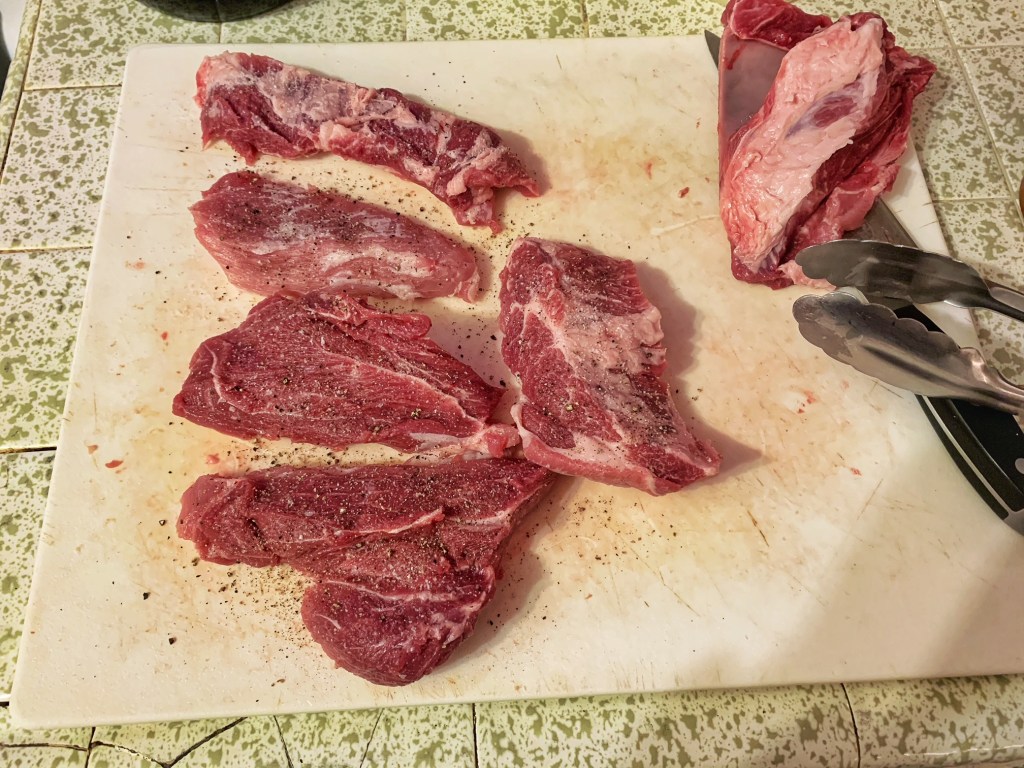
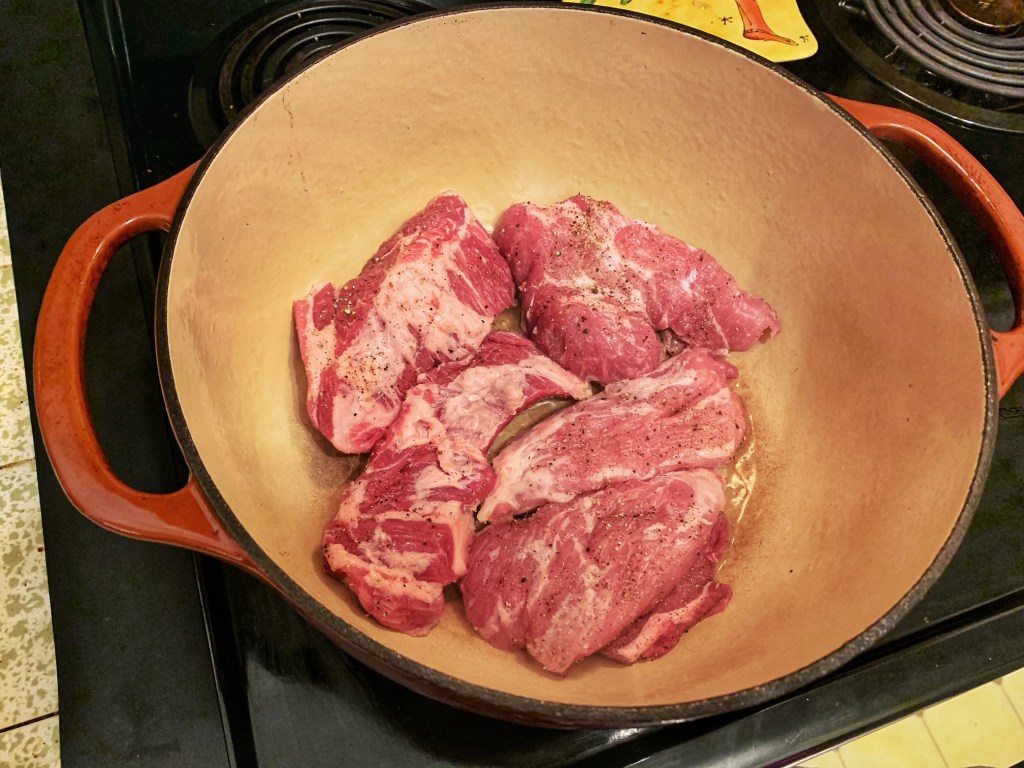
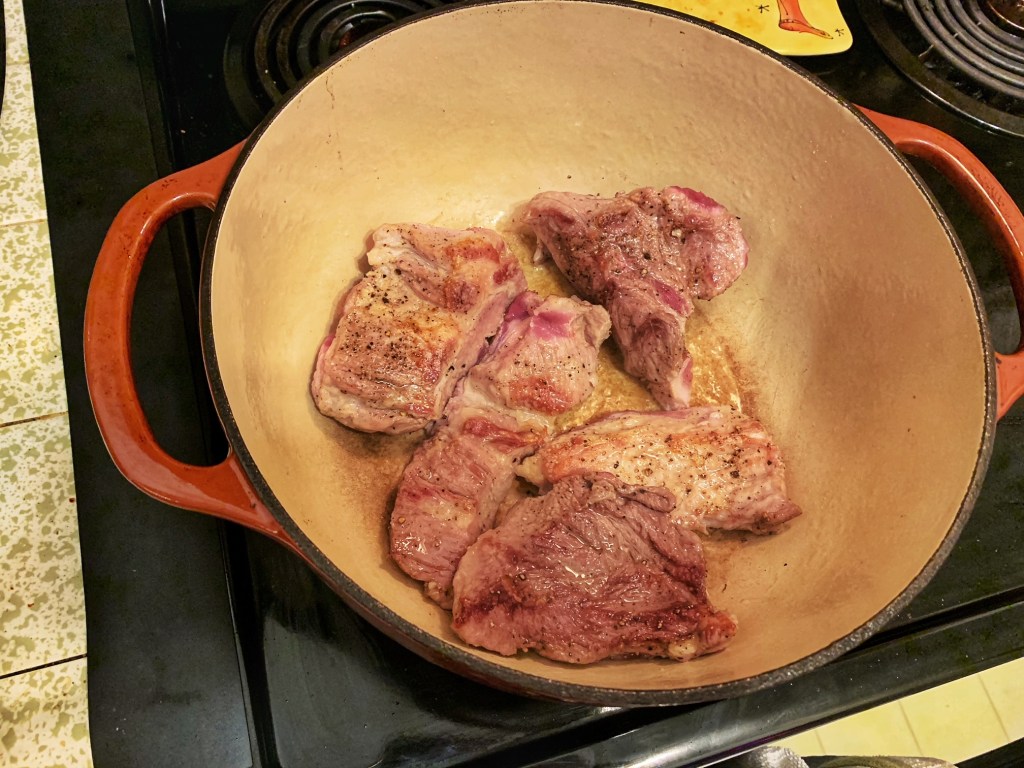
- In a heavy pot over medium high, heat up a couple tablespoons of oil and then sear the pork pieces at least 3-4 minutes on each side so they are nice and crusty. Please be patient and do this in batches. Add some more oil to the pot as needed and try not to crowd the pot to ensure proper crustification. Yes, that’s a word. Transfer the browned pork to a bowl or plate and set aside.
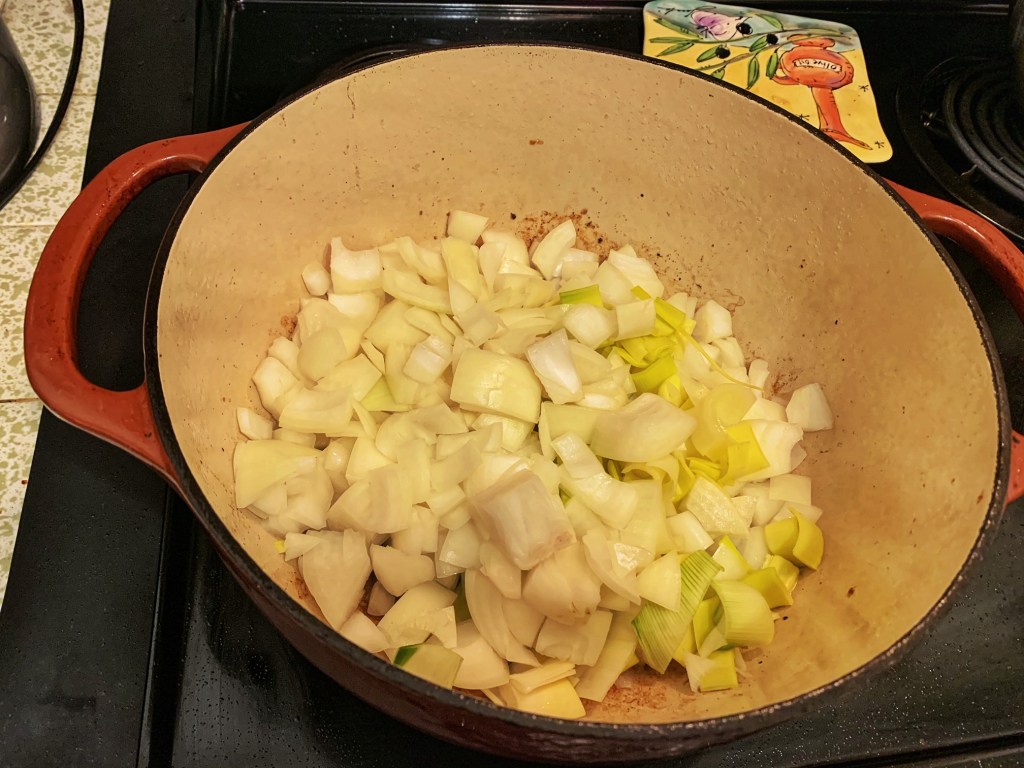
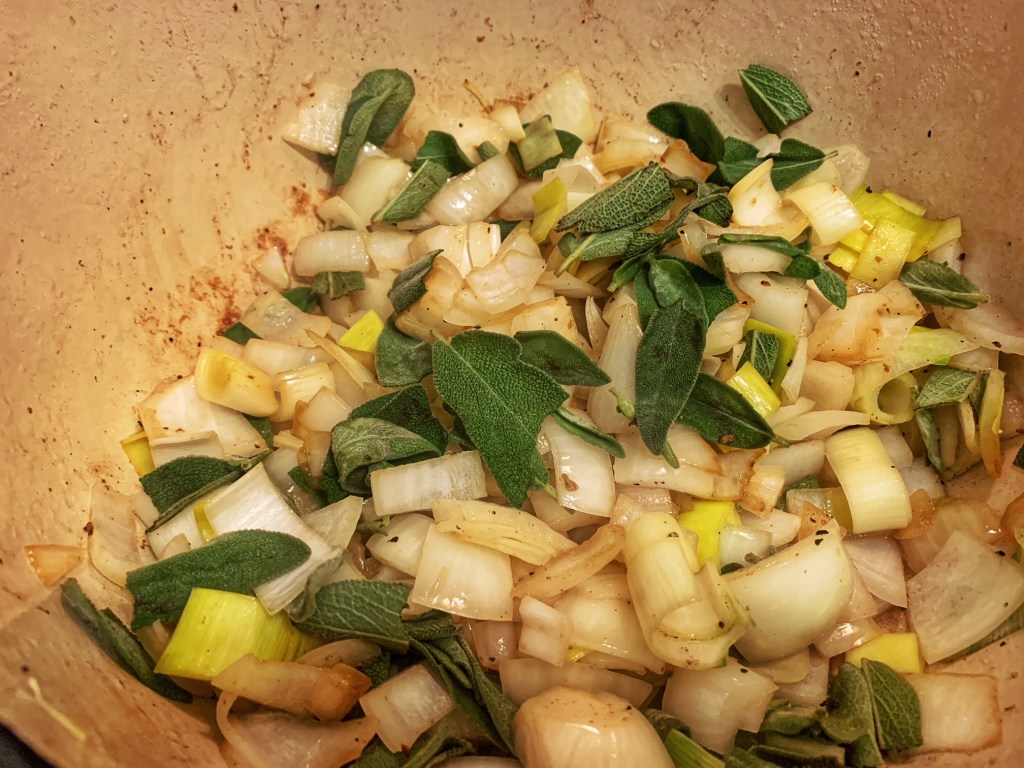
- In the same pot, add the chopped onion and season with salt and pepper. Sautee for a few minutes until they begin to sweat. Add the torn sage leaves and continue to cook another few minutes, stirring frequently until the onions are soft.
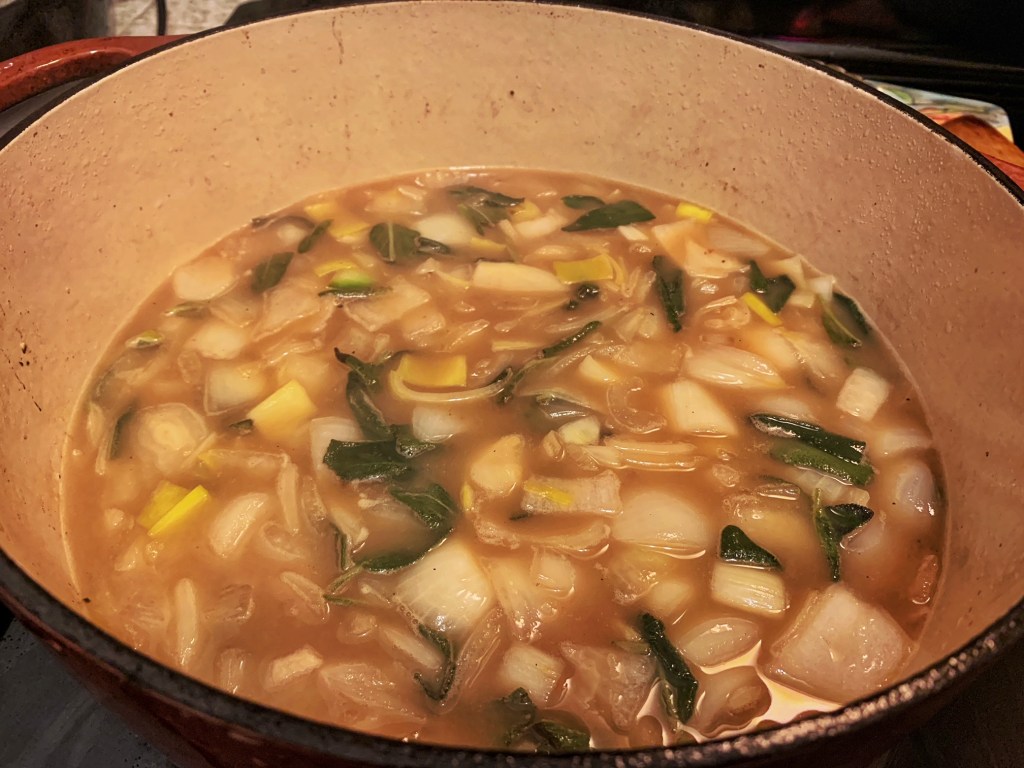
- Pour the apple cider into the pot and stir to deglaze the pot. When you were searing the pork earlier, you should get some of that crusts stuck to the bottom of the pot. Deglazing is the process of adding liquid to loosen this crust. It makes for very delicious sauce. Raise the heat to high and bring up to a boil. Stir in the apple cider vinegar and then reduce heat to low.
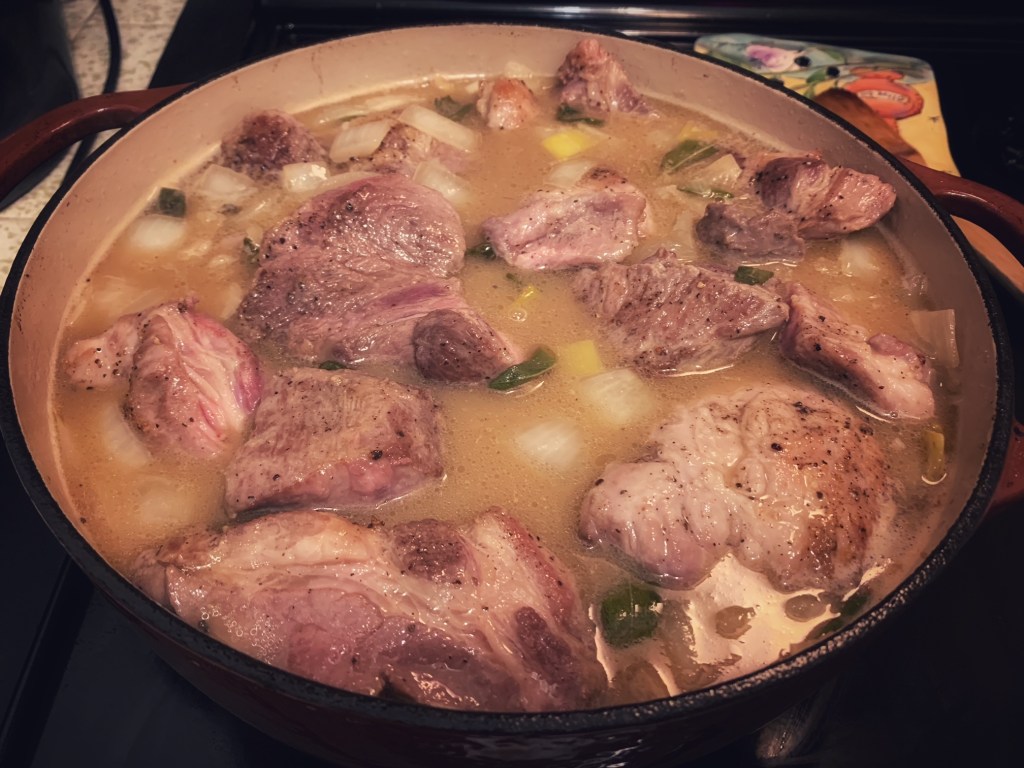
- Transfer the pork pieces back to the cider mixture. If there are any juices from the pork, pour that in too. Cover the pot and simmer gently. Now here comes the low and slow part. If your pot is anything like mine, it would be close to overflowing and not all the pork pieces are submerged. So, to make sure they are cooked evenly, stir gently every 30 minutes or so and make sure to rotate the pieces at the bottom to the top and vice versa.
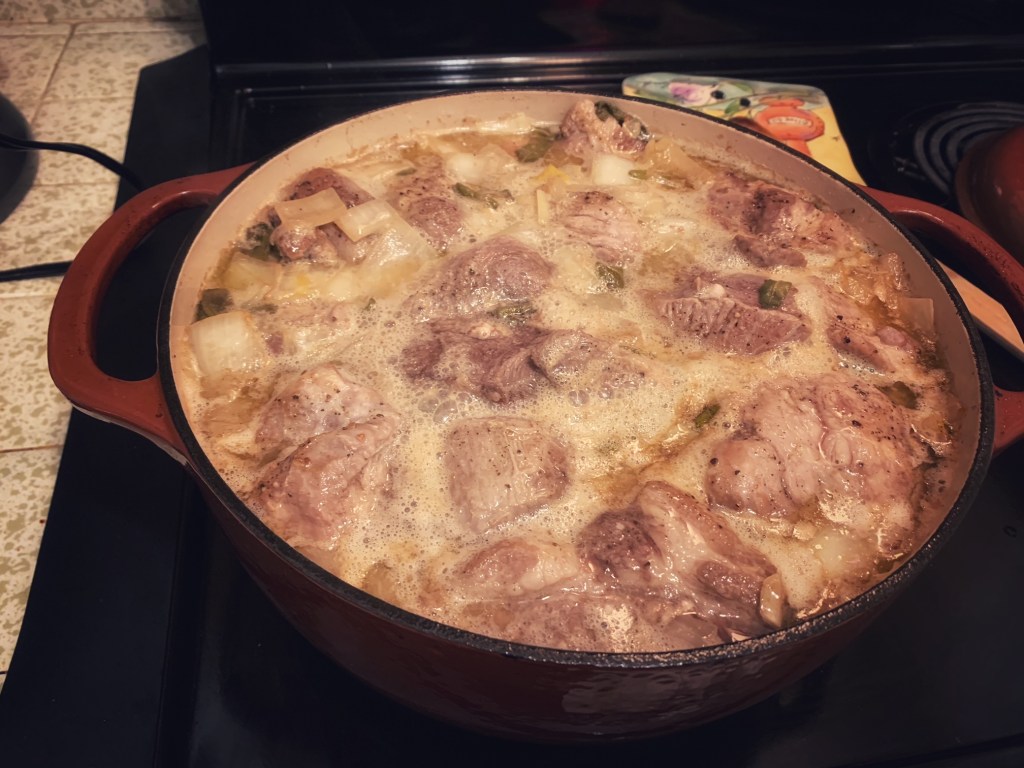
- After about 2 hours, poke the pork pieces with a fork to check if they are tender. You want to make sure that the pork will yield easily but they should still hold their shape. At this point take the pork out and set them aside in a large bowl or a plate. Raise the heat to medium-high and let the braising liquid boil for about 30 minutes to reduce. It won’t reduce by much but it will concentrate the flavors a little more.
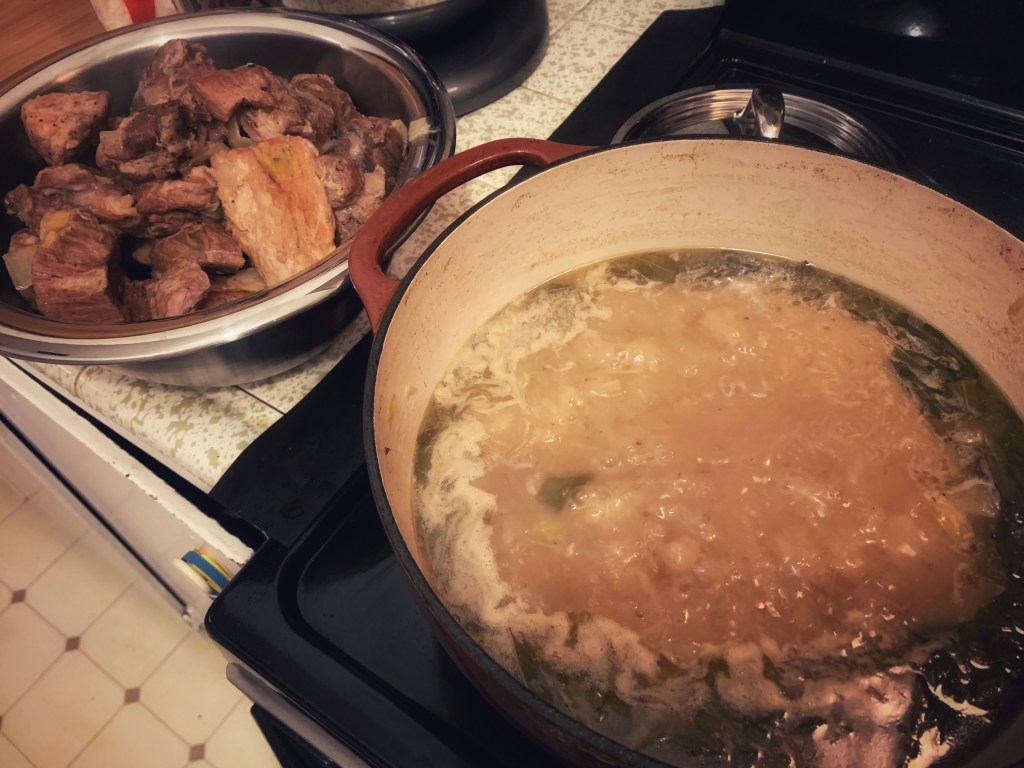
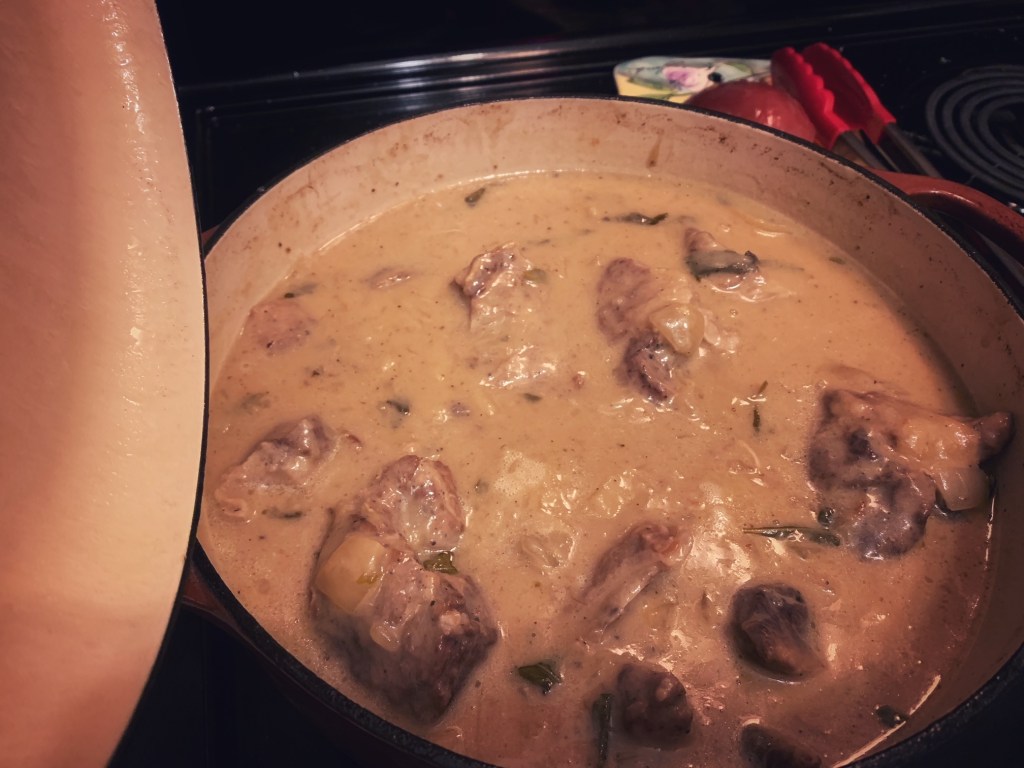
- Reduce the heat the low and stir in the heavy cream or half and half. Taste and season with salt and pepper as needed. In a small bowl, mix cornstarch with equal amounts of water to create a slurry. Stir this into the braising liquid to thicken a little. Put the pork back into the liquid and cook for another 5-10 minutes while stirring gently to make sure everything comes up to temperature.
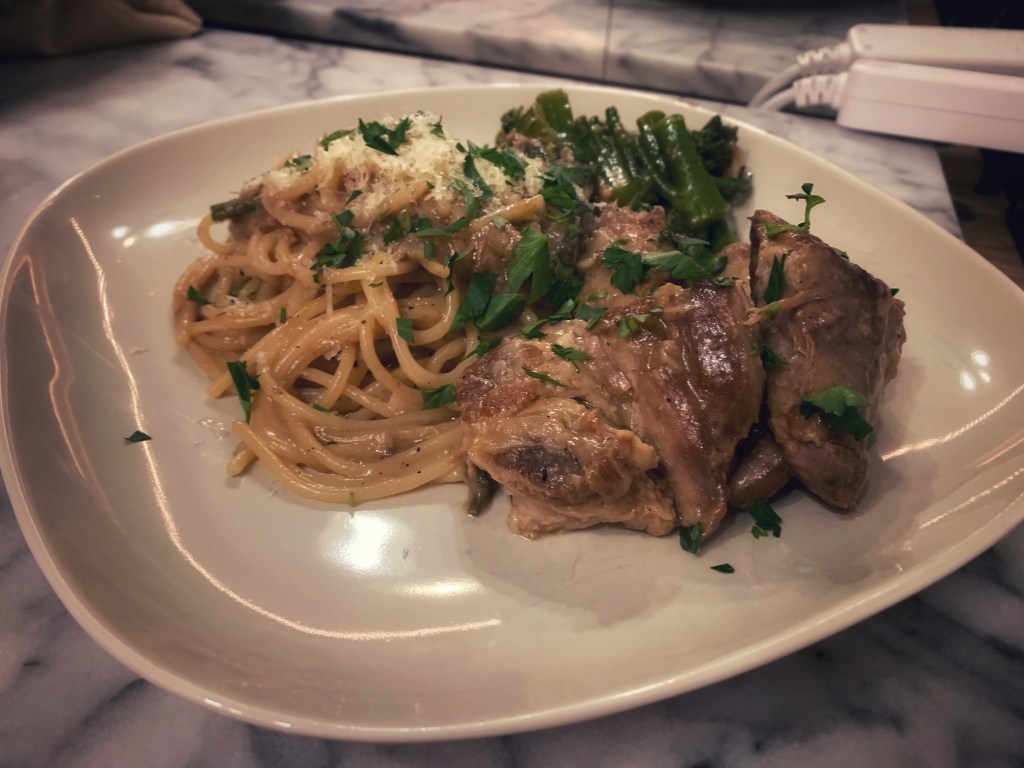
- This pork dish is very versatile. This time I served it with buttered noodles but it will also be just as delicious on steamed rice or mashed potatoes. Or any other kind of potato dish or just a side of vegetables for those of us who are watching our diet (trust me, this dish has enough calories as it is).
- Note: in case you are wondering, yes you can use a crock pot or instant pot. For crock pot, follow the directions up to cooking the onions and sage. Combine the onions, sage, pork pieces, and half the amount of cider in the crock pot and cook on high. When I set my crock pot to low, the meat just falls apart so this is why I recommend setting it on high. Check after four hours to see if the pork is tender enough. If not, continue cooking and check every 30 minutes. When you deem the pork to be tender enough, stir in 0.5 cup of cream or half and half. I have never used an instant pot so I can’t give you proper recommendation but I believe you can use the general guideline for cooking stew and also use half the liquid.
 A Dash of Yoyo